Patch 18.6 review — November 4, 2026
The released 18.6 notes list no standard craftable-item recipe or balance change. This guide retains the checked 18.5 baseline, including its October 27 corrections where relevant. Champion, trait and Augment changes can still change which holder or board benefits from an item; this review does not establish a measured best-in-slot ranking.
Official Riot Patch 18.6 notes, published November 3 UTC / November 4 JST. Review scope: the released notes; PC/mobile regional deployment may take longer. Earlier dated sections retain their historical patch scope.
Patch 18.5 review — October 22, 2026
Riot’s released 18.5 notes list no standard craftable-item recipe or balance change. This guide’s component and holder decision framework therefore carries forward from the checked 18.4 baseline. Radiant Adaptive Helm and Radiant Blue Buff are reduced separately, and several champions, traits, Augments and Wisps change. Check those effects when choosing the holder; this review does not establish a new item tier list or measured best build.
Official Riot Patch 18.5 notes. Earlier dated patch sections retain their historical scope.
Current Set: Set 18 — Enchanted Wilds
Current Patch: 18.6
Last Verified:
Status: Evergreen carousel decision framework
This guide explains reusable carousel item priorities. Carousel rules, available units, item effects, recipes, and set mechanics can change between TFT sets and patches.
Patch 18.1 brought the Carousel back for Set 18. Riot noted that a Carousel can contain more champions and/or higher-cost champions than normal, so the unit attached to an item can matter more in close decisions. That framework remains relevant in Patch 18.5. Your board need and completed-item value should still drive most choices. For current Enchanted Wilds item and holder context, see TFT Item Components & Recipes Explained.
Patch 18.5 item check — October 22, 2026: Standard component recipes and standard craftable-item balance are unchanged in Riot Patch 18.5 notes. Values established in Riot Patch 18.4 notes therefore continue: Crownguard grants 20 bonus Ability Power when its shield expires; Spirit Visage has 10% Durability (Radiant: 18%); Elderwood Emblem grants 25 Resists. The separate 18.5 reductions to Radiant Adaptive Helm and Radiant Blue Buff do not apply to their standard versions.
Quick Answer
Take the carousel component that solves the most important realistic problem on your board. First check whether one component completes a strong item you can use immediately. Then check whether you have a credible holder, whether the item protects HP or a win streak, and whether the component remains useful across several future lines. Do not take a component only because it belongs to a theoretical best-in-slot item. If no option creates immediate value, choose the component with the best flexible pairings for your likely carry and frontline. Denying another player is usually a tiebreaker, not the main reason for your choice.
Why Carousel Item Priority Is Difficult
A carousel choice looks simple because you are selecting one unit and one item. The real decision includes several connected questions:
- Which component completes an item now?
- Which completed item fixes the board’s current weakness?
- Who can hold the item immediately?
- How much HP or tempo will waiting cost?
- Which component keeps the most future paths open?
- Does the unit itself provide meaningful value?
The strongest answer changes with your board, inventory, stage, and lobby. A component that is correct for one player can be low-value for another player in the same carousel.
Start With the Item You Can Complete
Before the carousel begins, look at every component on your bench and list the completed items that one additional component would create. This turns the choice from a vague component ranking into a set of concrete item options.
If several components are competing for different completions, use TFT Item Bench Management: When to Combine, Wait, or Pivot to compare the full inventory rather than evaluating one component in isolation.
For example, do not think only, “I want a 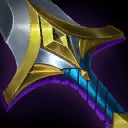 Sword.” Think, “A Sword completes one offensive item, one healing item, and one utility option. Which of those items can my board use?” The completed item matters more than the isolated component.
If one component completes an item that immediately improves a strong current holder, that option should usually move near the top of your priority list.
Identify the Board Problem
The correct carousel item should address a real weakness rather than follow a generic ranking. Ask why you are winning or losing fights.
- Your frontline dies first: prioritize durability, healing, resistances, or utility that buys more combat time.
- Your damage is too low: prioritize an offensive item that a current holder can use consistently.
- Your units cast too late: compare mana access, attack speed, and additional frontline time before assuming one specific mana item is required.
- Your board is strong but inflexible: prefer components that preserve several late-game holders and item paths.
- Your inventory is overloaded: choose a component that turns multiple awkward pieces into one or two playable completed items.
Use Tank Items Explained when the board needs more time and Support Items Explained when utility may create more total value than another damage item.
Check the Holder Before Committing
A component can complete a strong item and still be the wrong carousel choice if nobody on the current board can use the item. A credible holder should be upgraded enough to contribute, match the item’s purpose, and remain active long enough for the item to matter.
Also check transferability. A temporary holder is more valuable when the item can move cleanly to several possible final units. An Item Remover can make a temporary slam easier, but the consumable should support a good decision rather than rescue a careless one.
Read How to Choose an Item Holder in TFT for a full holder checklist and TFT Item Remover Guide for transfer timing.
How HP Changes Carousel Priority
Low HP increases the value of immediate power. When every loss threatens elimination or removes future decisions, a playable completed item with a real holder is usually more valuable than preserving a perfect late-game component path.
High HP gives you more freedom to choose flexible components, preserve optionality, or wait for a stronger final combination. That does not mean high-HP players should always greed. A component that protects a win streak or creates a major power spike can still be the best choice.
The practical rule is simple: the lower your HP and the weaker your board, the more weight you should give to a component that completes useful power now.
How Stage Changes Carousel Priority
Early carousel choices should usually favor flexibility because your final carry, frontline, and composition are uncertain. Components with several useful pairings can support multiple transitions.
Later carousel choices should become more concrete. There are fewer rounds left for unused flexibility to pay off, and your final holders are usually clearer. Late in the game, prioritize the item that improves the next important fight, completes a needed role, or upgrades a final holder.
As the game progresses, move from “Which component is generally flexible?” toward “Which item will change my next fight?”
When to Take a Flexible Component
A flexible component is strongest when your final direction is unclear and several useful combinations remain available. Choose flexibility when:
- your board is stable enough to wait for one more piece of information
- the component pairs well with several pieces already on your bench
- multiple possible carries or tanks can use the resulting items
- the current narrow completion has no credible holder
- your next transition is not yet determined
Flexible does not mean weak. The goal is to preserve several strong outcomes, not to choose a component that merely has many recipes.
When a Specific Component Is Worth Taking
A narrow component choice can be correct when the board and holder are already committed enough to support it. Take the specific component when it completes a high-impact item, the intended holder is ready, and the alternative choices do not solve a more urgent problem.
This is different from forcing best-in-slot. You are not taking the component because a guide lists it as ideal. You are taking it because the current board can convert it into immediate, reliable value.
Use BIS vs Flexible Items when deciding whether the ideal component is worth more than a playable alternative.
Should the Unit Affect Your Choice?
The item should usually be the main priority, but the carousel unit can change close decisions. Set 18 brought back Carousels with situations where more champions or higher-cost champions can appear than normal, and that remains relevant in Patch 18.5. A unit may complete an upgrade, provide immediate board strength, improve your economy when sold, or support a realistic transition.
Patch 18.2 bugfix: Riot also fixed Coven Emblem appearing on Carousel after Stage 5. Do not plan around finding a Coven Emblem from late-game Carousels after that point.
Do not sacrifice a critical item completion for a unit that provides only theoretical future value. Treat the unit as an additional benefit or a tiebreaker unless it creates a clear and immediate power spike.
When Denial Matters
Denying another player can matter late in the game when only a few opponents remain and you understand exactly what they need. Even then, denial should usually come after your own board needs.
Do not weaken your own item plan to deny an opponent a component that they may not even use. Denial is strongest when two choices are already close for you and one choice also removes a clear power spike from a direct opponent.
Use Reforgers as a Recovery Option, Not a Plan
A Reforger can reduce the risk of an awkward completed item, but it should not make every carousel choice acceptable. The reroll result may still be low-value for your board.
Choose the component that creates the best current decision first. Use a Reforger when the completed item is genuinely poor, the current board can survive the uncertainty, and a wider range of outcomes would improve the position.
See TFT Reforger Guide before turning a carousel choice into a reroll.
Practical Carousel Scenarios
Low HP and One Component Completes a Tank Item
Your frontline is collapsing and the defensive item has an upgraded holder. Take the component and build the item. Preserving a theoretical carry component is less valuable if the carry never receives enough combat time.
High HP With No Final Carry
Choose a component with several strong offensive and utility pairings rather than forcing one narrow carry item. Place any completed item on a transferable temporary holder and reassess after the next major shop or loot decision.
Two Choices Complete Playable Items
Compare the holders and board problems. Prefer the item that improves the weaker side of the board, remains useful across more transitions, or changes the next fight more reliably. If the choices remain close, the carousel unit or opponent denial can break the tie.
The Desired Component Is Unavailable
Do not leave the carousel without a plan. Choose the best alternative by checking which remaining component completes a playable item, pairs with multiple bench pieces, or solves a secondary board problem. Adaptation is better than treating the carousel as a failed best-in-slot attempt.
A Fast Carousel Checklist
- Which component completes an item immediately?
- What problem does that completed item solve?
- Who will hold it this round?
- How much HP or tempo does it protect?
- Does the component keep useful alternatives open?
- Does the carousel unit create real value?
- Is denial only a tiebreaker, or is it actually worth the cost?
Official Source
The Patch 18.1 notes document the historical Carousel return. Use Riot Patch 18.5 notes for current balance changes, and the item preview for the choice available in your match.
Final Takeaway
The best carousel component is the one your actual board can convert into the most useful value. Start with completed-item possibilities, identify the board problem, confirm the holder, and adjust for HP and stage. Prefer flexibility when your direction is unclear, but take a specific component when it creates a real power spike. Use the unit, denial, Reforgers, and Item Removers as supporting factors rather than substitutes for a strong item decision.