Patch 18.6 follow-up — November 10, 2026
Riot’s November 6 and November 10 mid-patch updates focus on bug fixes and client-side improvements, not standard item recipe or balance changes. The Nesting Anvil full-bench fix affects reward delivery, not the recipe itself. This guide retains the checked 18.5 baseline, including its October 27 corrections. Champion, trait, and Augment changes can still affect holder value; the recipe table is a reference, not a measured best-in-slot ranking.
Official Riot Patch 18.6 notes, published November 3 UTC / November 4 JST. Checked through the November 10 mid-patch update; regional rollout can vary. Earlier dated sections retain their historical scope.
October 27 mid-patch update
Checked October 27, 2026 against Riot official 18.5 mid-patch notes. Standard Hand of Justice base Omnivamp is now 12% (was 15%); Radiant base Omnivamp is 25% (was 30%). Brambleback Armor Ignore is 30% base + 10% AP (was 25% + 25% AP); its on-hit healing remains 4%. Kha’Zix base damage is 230/310/450 AP and isolated damage is 250/350/530 AP. Recipes are unchanged. Standard and Radiant values are separate; champion skills are outside the item-only simulator.
Patch 18.5 review — October 27, 2026
Standard recipes remain unchanged, but the October 27 update reduces Hand of Justice base Omnivamp to 12% (Radiant: 25%). This guide’s component and holder decision framework therefore carries forward from the checked 18.4 baseline. Radiant Adaptive Helm and Radiant Blue Buff are reduced separately, and several champions, traits, Augments and Wisps change. Check those effects when choosing the holder; this review does not establish a new item tier list or measured best build.
Official Riot Patch 18.5 notes. Earlier dated patch sections retain their historical scope.
Current Set: Set 18 — Enchanted Wilds
Last reviewed patch: 18.6
Last Verified:
Status: 36 standard component recipes checked through the November 10 Patch 18.6 update
This guide explains how TFT item components work, how recipes become completed items, and how to decide what to build from the components you actually have. Exact item effects can change between patches, but the component-to-decision framework is reusable.
This recipe reference was reviewed on October 27, 2026, including the October 27 18.5 mid-patch update, against Riot Patch 18.5 notes and the earlier official changes it retains. All 36 standard component pairings remain unchanged. Crownguard, Spirit Visage, and Elderwood Emblem retain the values established in 18.4; the Radiant Adaptive Helm and Radiant Blue Buff reductions in 18.5 apply only to Radiant versions.
Quick Answer
Most completed TFT items are made by combining two basic components, and the pair determines the recipe. Use the component matrix below to see what your pieces create, then decide whether the item solves your board’s current problem, has a good holder, and is worth building now.
The eight basic components you will use most often are B.F. Sword, Needlessly Large Rod, Recurve Bow, Tear of the Goddess, Chain Vest, Negatron Cloak, Giant’s Belt, and Sparring Gloves. Special components such as  Spatula and
 Frying Pan, along with other emblem-making items, should be treated separately because their rules and set context can differ.
TFT Item Component Cheat Sheet
| Component | Usually points toward | First question to ask |
|---|---|---|
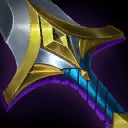 B.F. Sword | Physical damage, attack scaling, damage amplification | Do I already have an AD holder who can use power now? |
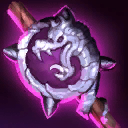 Needlessly Large Rod | Ability Power, spell damage, magic-oriented utility | Does my board need more spell value or a better AP holder? |
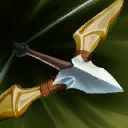 Recurve Bow | Attack Speed, ramping damage, repeated attacks | Will the holder live long enough for Attack Speed to matter? |
 Tear of the Goddess | Mana, earlier casts, repeated spell access | Does an earlier or extra cast actually change the fight? |
 Chain Vest | Armor, physical durability, frontline coverage | Am I losing to physical damage or simply lacking frontline time? |
 Negatron Cloak | Magic Resistance, mixed defenses, durability | Is magic damage the real threat, or do I need broader defensive coverage? |
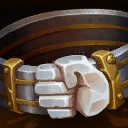 Giant’s Belt | Health, frontline durability, utility | Does my board need more raw combat time or a specific utility effect? |
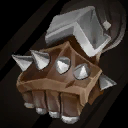 Sparring Gloves | Critical-strike paths, flexible offense, defense, or utility | Which role needs the most help: carry, frontline, or utility? |
This is a decision cheat sheet, not a tier list. A component is valuable because of the completed items it can make for your current board, not because one component is always stronger than another.
If you already know the role your board needs, continue with AD Items, AP Items, Tank Items, or  Support Items.
TFT Item Quick Reference: Recipes, Uses, and Best Situations
This Patch 18.6 quick reference covers all 36 completed items made from the eight standard components. Use it when you know your components but need to decide what the finished item is for and what kind of fight it solves. Spatula, Frying Pan, Emblem, Radiant, Artifact, Support, and Tactician-item combinations are separate.
The Best situation column is a practical decision shortcut, not a best-in-slot ranking. It intentionally avoids exact numerical values so the table remains useful through small balance changes; recheck the current in-game tooltip after item or system updates.
Fastest Way to Pick an Item: Start With the Fight Problem
| If this is why you are losing… | Start by comparing… |
|---|---|
| You cannot break the main tank | Giant Slayer; Last Whisper or Evenshroud for physical damage; Void Staff or Ionic Spark for magic damage. |
| Enemy healing keeps undoing your damage | Red Buff, Morellonomicon, or Sunfire Cape—pick the holder that can reach the healing target. |
| Your caster needs another useful cast | Spear of Shojin, Nashor’s Tooth, Protector’s Vow, or Adaptive Helm depending on attack pattern and role. |
| Your carry dies to burst or focus | Edge of Night, Bloodthirster, Sterak’s Gage, or Quicksilver depending on whether the problem is burst, sustain, or CC. |
| The fight is long and your holder has uptime | Guinsoo’s Rageblade, Kraken’s Fury, Archangel’s Staff, Titan’s Resolve, or Striker’s Flail. |
| Your frontline collapses before damage can work | Warmog’s Armor, Gargoyle Stoneplate, Bramble Vest, Steadfast Heart, Spirit Visage, or a matchup-specific defensive item. |
Component Pair Matrix: What Does This Pair Make?
Use this matrix when the components on your bench are the starting point. Pick one component from the left and one from the top; the cell shows the completed item. The order does not matter.
| + | Sword | Bow | Rod | Tear | Vest | Cloak | Belt | Gloves |
|---|---|---|---|---|---|---|---|---|
| Sword | Deathblade | Giant Slayer | Hextech Gunblade | Spear of Shojin | Edge of Night | Bloodthirster | Sterak’s Gage | Infinity Edge |
| Bow | Giant Slayer | Red Buff | Guinsoo’s Rageblade | Void Staff | Titan’s Resolve | Kraken’s Fury | Nashor’s Tooth | Last Whisper |
| Rod | Hextech Gunblade | Guinsoo’s Rageblade | Rabadon’s Deathcap | Archangel’s Staff | Crownguard | Ionic Spark | Morellonomicon | Jeweled Gauntlet |
| Tear | Spear of Shojin | Void Staff | Archangel’s Staff | Blue Buff | Protector’s Vow | Adaptive Helm | Spirit Visage | Hand of Justice |
| Vest | Edge of Night | Titan’s Resolve | Crownguard | Protector’s Vow | Bramble Vest | Gargoyle Stoneplate | Sunfire Cape | Steadfast Heart |
| Cloak | Bloodthirster | Kraken’s Fury | Ionic Spark | Adaptive Helm | Gargoyle Stoneplate | Dragon’s Claw | Evenshroud | Quicksilver |
| Belt | Sterak’s Gage | Nashor’s Tooth | Morellonomicon | Spirit Visage | Sunfire Cape | Evenshroud | Warmog’s Armor | Striker’s Flail |
| Gloves | Infinity Edge | Last Whisper | Jeweled Gauntlet | Hand of Justice | Steadfast Heart | Quicksilver | Striker’s Flail | Thief’s Gloves |
After you find the item name, use the full table below to check its main job and the situation where it is most likely to solve your board’s problem.
All 36 Standard Component Recipes
| Completed item | Recipe | Main use | Best situation |
|---|---|---|---|
| Deathblade | B.F. Sword + B.F. Sword | Raw AD / immediate damage | Your holder already has good uptime and simply needs more physical damage. |
| Giant Slayer | B.F. Sword + Recurve Bow | Anti-tank damage | Enemy frontline contains Tank-role units. High maximum Health alone does not activate the extra Damage Amp. |
| Hextech Gunblade | B.F. Sword + Needlessly Large Rod | Hybrid damage + sustain | A repeated-damage carry needs healing to stay in the fight. |
| Spear of Shojin | B.F. Sword + Tear of the Goddess | Mana from attacks / more casts | The holder attacks between casts and one extra cast can swing the fight. |
| Edge of Night | B.F. Sword + Chain Vest | Burst protection / target reset | A carry is being focused or dies before reaching a second damage cycle. |
| Bloodthirster | B.F. Sword + Negatron Cloak | Sustain + emergency shield | A bruiser or carry drops low but can keep dealing damage if it survives the burst. |
| Sterak’s Gage | B.F. Sword + Giant’s Belt | HP-scaling shield for AD bruisers | A melee AD holder takes heavy burst and has enough Health to make the shield valuable. |
| Infinity Edge | B.F. Sword + Sparring Gloves | Critical physical burst | A physical carry has reliable uptime and benefits from Precision/critical scaling. |
| Red Buff | Recurve Bow + Recurve Bow | Burn + Wound / anti-healing | Healing is keeping enemies alive and the holder can repeatedly damage the relevant targets. |
| Guinsoo’s Rageblade | Recurve Bow + Needlessly Large Rod | Attack Speed ramp | Fights last long enough for a protected auto-attacker to keep scaling. |
| Void Staff | Recurve Bow + Tear of the Goddess | Magic Resist Shred | A magic-damage board is blocked by MR and the holder can tag the same targets your carry hits. |
| Titan’s Resolve | Recurve Bow + Chain Vest | Stacking offense + durability | A fighter or tank will attack and take damage for a long time and can reach high stacks. |
| Kraken’s Fury | Recurve Bow + Negatron Cloak | Attack-stacking AD | A physical carry can auto-attack continuously through a long fight. |
| Nashor’s Tooth | Recurve Bow + Giant’s Belt | Mana from attacks | A caster attacks often between spells, especially if it can crit those attacks. |
| Last Whisper | Recurve Bow + Sparring Gloves | Armor Sunder | Your physical damage is being stopped by Armor and a holder can reliably tag priority targets. |
| Rabadon’s Deathcap | Needlessly Large Rod + Needlessly Large Rod | Immediate AP / spell damage | An early or important cast needs to hit harder now rather than scale later. |
| Archangel’s Staff | Needlessly Large Rod + Tear of the Goddess | Long-fight AP scaling | A protected caster survives through repeated 5-second scaling windows. |
| Crownguard | Needlessly Large Rod + Chain Vest | Shield + later AP for a frontline caster | A battle mage or frontline AP holder can survive the opening shield and keep casting afterward. |
| Ionic Spark | Needlessly Large Rod + Negatron Cloak | Nearby MR Shred + cast punishment | Your AP board needs MR reduction and a durable holder can stay close to enemy casters. |
| Morellonomicon | Needlessly Large Rod + Giant’s Belt | Burn + Wound on damage | Enemy healing is a problem and your holder has reliable AoE or repeated spell coverage. |
| Jeweled Gauntlet | Needlessly Large Rod + Sparring Gloves | Critical spell burst | An AP carry wants Precision/critical scaling to raise burst damage. |
| Blue Buff | Tear of the Goddess + Tear of the Goddess | AD/AP scaling amplifier | The holder already gains meaningful AD or AP from traits, items, or augments and can multiply that scaling. |
| Protector’s Vow | Tear of the Goddess + Chain Vest | Early cast + low-Health shield | A frontline or utility unit needs an early cast and one strong survival trigger. |
| Adaptive Helm | Tear of the Goddess + Negatron Cloak | More Mana from all sources + role bonus | The holder needs more casting and can exploit its Tank/Fighter or damage-role bonus. |
| Spirit Visage | Tear of the Goddess + Giant’s Belt | Missing-Health regeneration | A durable tank survives long enough for repeated regeneration to matter. |
| Hand of Justice | Tear of the Goddess + Sparring Gloves | Flexible damage + omnivamp | A carry or bruiser values both offense and sustain and can use hybrid AD/AP stats. |
| Bramble Vest | Chain Vest + Chain Vest | Anti-auto durability | Enemy boards rely heavily on attacks and your tank will be hit repeatedly. |
| Gargoyle Stoneplate | Chain Vest + Negatron Cloak | Focused-target resistances | One main tank is being targeted by many enemies at once. |
| Sunfire Cape | Chain Vest + Giant’s Belt | Frontline Burn + Wound | Enemy healing is strong and your tank can stay near the units that need to be Wounded. |
| Steadfast Heart | Chain Vest + Sparring Gloves | Consistent durability | A frontliner starts fights healthy and benefits from staying above half Health as long as possible. |
| Dragon’s Claw | Negatron Cloak + Negatron Cloak | MR + long-fight regeneration | Your tank faces sustained magic pressure and can survive long enough to regenerate. |
| Evenshroud | Negatron Cloak + Giant’s Belt | Frontline Armor Sunder | A physical-damage board needs Armor reduction and a tank can stay close to the enemy frontline. |
| Quicksilver | Negatron Cloak + Sparring Gloves | Crowd-control immunity + Attack Speed ramp | A carry is losing fights to CC and can keep attacking through a long combat. |
| Warmog’s Armor | Giant’s Belt + Giant’s Belt | Raw max Health | Your frontline needs generic durability against mixed damage rather than a specific resistance. |
| Striker’s Flail | Giant’s Belt + Sparring Gloves | Crit-based Damage Amp ramp | The holder crits frequently and has enough uptime to build repeated Damage Amp stacks. |
| Thief’s Gloves | Sparring Gloves + Sparring Gloves | Flexible random-item tempo | A flexible unit has three open item slots and you value immediate broad power over a precise build. |
How to use the table: first name the fight problem, then compare only the recipes your bench can actually make. A theoretically stronger item is not automatically better if it has no good holder, arrives too late, duplicates utility you already have, or leaves the rest of your components awkward.
How TFT Item Recipes Work
An item recipe is simply the component pair that produces a completed item. If you combine two compatible components, the result is fixed for that recipe. Two copies of the same component also create a completed item, so duplicate components are not automatically awkward.
The recipe tells you what you can make. It does not tell you what you should make. In a real game, a technically correct recipe can still be a poor decision if the item has no useful holder, solves the wrong problem, or costs you a better flexible path.
Recipe vs Decision: The Part That Actually Wins Games
When two components are on your bench, use this order:
- Identify the board problem. Are you missing damage, frontline time, cast frequency, utility, or a stable holder?
- List the realistic completed items. Do not evaluate only your favorite recipe; compare the useful outcomes from both components.
- Check the holder. A good item with no playable holder can be weaker than a flexible item that immediately upgrades a strong 2-star unit.
- Check HP and stage. When you are losing rounds, waiting has a real cost. When you are healthy and flexible, preserving components can be more reasonable.
- Check the future path. Ask whether the completed item can transfer to another carry, tank, or support unit later.
For the timing side of this decision, see Slamming Items in TFT: When to Slam vs Wait. For the holder side, see What Is an Item Holder in TFT?.
What to Do When You Have Two of the Same Component
Duplicate components create an important choice: combine them together or split them into two different completed items. The answer depends on your holder, stage, HP, and the other components you expect to use.
Damage components
Defense and flexible components
Should You Memorize Every TFT Item Recipe?
Memorizing recipes helps you play faster, but it should not be your first priority. A player who knows every recipe but cannot judge holders, HP, tempo, or frontline needs will still make weak item decisions.
A better learning order is:
- Learn what each basic component generally supports.
- Learn a few flexible completed-item paths for each component.
- Learn when to slam instead of waiting.
- Learn how to choose temporary holders.
- Then add exact recipe recall through repetition.
What If Your Components Are Awkward?
Awkward components are usually a decision problem, not a dead end. Before holding them indefinitely, ask whether they can create a useful frontline item, a temporary carry item, or utility that improves the whole board.
Use How to Handle Leftover Components in TFT when your bench does not make a clean pair, and TFT Item Bench Management when you have several possible combinations competing for the same components.
Item Values Retained in Patch 18.5
Patch 18.5 retains the following values established in Riot Patch 18.4 notes: Crownguard grants 20 bonus Ability Power when its shield expires (previously 25); Spirit Visage has 10% Durability (previously 8%; Radiant: 18%, previously 15%); Elderwood Emblem grants 25 Resists (previously 35). Riot Patch 18.5 notes confirms in its October 22 B-patch that Elderwood Emblem’s 18.4 nerf is restored after a temporary regression. Its current value is 25 Resists. No standard craftable-item recipe or balance change is listed in that B-patch.
For broader historical Set 18 itemization context from Patch 18.2, including Item Wisp costs and sustain-item changes, see TFT Patch 18.2 Item Decisions: Enchanted Wilds. Its prices and values are historical; use the Patch 18.5 values above and the current Wisp guide for live decisions.
Official Sources
- Riot Games: Teamfight Tactics Patch 18.4 (including the October 7 update)
- Riot Games: Teamfight Tactics Patch 18.3
- Riot Games: Teamfight Tactics Patch 18.2 (historical item context)
- Riot Games: Enchanted Wilds Overview
Final Takeaway
TFT item recipes tell you what two components can become. Good item play is deciding whether that completed item helps the board you have right now. Learn the eight basic component roles, compare realistic recipe paths, check your holder and HP, and use the existing component guides when duplicate pieces create a difficult combine-versus-split decision.