Patch 18.6 follow-up — November 10, 2026
Riot’s November 6 and November 10 mid-patch updates focus on fixes and client-side changes. They announce no standard craftable-item recipe or balance change; this guide therefore keeps the checked 18.5 item baseline for its examples. Champion, trait and Augment changes can still change which holder or board benefits from an item. This review does not establish a measured best-in-slot ranking.
Official Riot Patch 18.6 notes, published November 3 UTC / November 4 JST. Checked through the November 6 and 10 mid-patch updates; regional rollout can vary. Earlier dated sections retain their historical patch scope.
Patch 18.5 review — October 22, 2026
Riot’s released 18.5 notes list no standard craftable-item recipe or balance change. This guide’s component and holder decision framework therefore carries forward from the checked 18.4 baseline. Radiant Adaptive Helm and Radiant Blue Buff are reduced separately, and several champions, traits, Augments and Wisps change. Check those effects when choosing the holder; this review does not establish a new item tier list or measured best build.
Official Riot Patch 18.5 notes. Earlier dated patch sections retain their historical scope.
Current Set: Set 18 — Enchanted Wilds
Current Patch: 18.6
Last Verified:
Status: Current guide with patch-sensitive item examples
This guide explains general early-game item principles. Specific items, holders, recipes, and optimal slams can change between sets and patches.
For current Set 18 item-system changes that can affect early slams, including Item Wisps, Completed Item Anvils, Adaptors, and Artifact updates, see TFT Item Components & Recipes Explained.
Official patch and set context: See Riot Games Patch 18.6 notes for the latest follow-up and Patch 18.5 notes for the checked item baseline, and the Enchanted Wilds overview for Wisps and Adaptors. The overview was published before release; use patch notes and in-game tooltips for current numbers. The early-item priorities in this guide are our strategic interpretation, not an official Riot item ranking.
Patch 18.5 item check — October 22, 2026: Standard component recipes and standard craftable-item balance are unchanged in Riot Patch 18.5 notes. Values established in Riot Patch 18.4 notes therefore continue: Crownguard grants 20 bonus Ability Power when its shield expires; Spirit Visage has 10% Durability (Radiant: 18%); Elderwood Emblem grants 25 Resists. The separate 18.5 reductions to Radiant Adaptive Helm and Radiant Blue Buff do not apply to their standard versions.
Early game item decisions can shape your entire Teamfight Tactics match.
A good early item can help you win rounds, protect HP, keep a streak alive, and make your board easier to play. A bad early item can lock you into the wrong direction or sit on a weak holder without creating enough value.
The best early game items in TFT are usually not the most perfect final items.
They are the items that give immediate board strength while keeping your future options open.
This guide explains what makes an item good in the early game, when to build early items, and how to avoid common early item mistakes.
If your problem starts with the components themselves, use TFT Item Components & Recipes Cheat Sheet to compare the eight basic components, recipe paths, and combine-versus-split decisions.
Quick Answer
The best early game items in TFT are flexible items that make your current board stronger without forcing one exact team comp.
Good early items usually do at least one of these things:
- increase damage immediately
- make your frontline survive longer
- work on multiple units
- transfer well to later carries or tanks
- help preserve HP
- support more than one possible team direction
You should usually avoid building narrow items too early unless you already have a clear plan and a good holder.
Concrete Early-Game Item Candidates
Compare these standard completed items only when your components or offered choices make them available. This is a shortlist of different jobs, not a measured win-rate tier list. Check the current item preview for recipes and values.
Guinsoo’s Rageblade: time for an attacker to ramp
Guinsoo’s Rageblade builds attack speed over time. Consider it when an upgraded attacker is already landing useful attacks and your frontline lets the fight continue. Move it down the list when the holder dies early, spends the fight unable to attack, or when frontline collapse is the immediate problem. A future carry that would love the item is not a substitute for a useful holder now.
Blue Buff: improve access to useful casts
Blue Buff is a mana-regeneration candidate. Compare it when a surviving unit is waiting for mana and another useful cast could change the fight. Move it down the list when the unit dies before using that mana or already casts reliably but lacks impact. Do not treat every caster as the same holder: its ability, existing mana support, and survival time decide how much another cast is worth.
 Warmog’s Armor or Sunfire Cape: survival versus utility
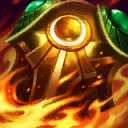
Compare Warmog’s Armor when a larger health pool could keep your upgraded frontliner alive through the opening damage. Compare Sunfire Cape when that holder can stay involved and Burn or Wound addresses the enemies your board cannot finish. These are different fixes, not interchangeable tank items. For matchup-specific alternatives, use the Bramble Vest, Dragon’s Claw, and sustain comparisons.
Mechanics references: Riot’s 2025 item-design update explains Rageblade’s time-based ramp, Patch 15.1 documents Blue Buff’s mana-regeneration rework, and Patch 16.4 documents Warmog’s health focus. These historical references explain item roles, not today’s exact numbers. The Set 18 overview above supplies Sunfire’s Burn/Wound context; follow current patch notes and tooltips for changes.
What Makes an Item Good Early?
An early item is good when it creates value right now.
In the early game, you often do not know your final comp yet. Your shops, augments, components, and opponents are still shaping the game.
Because of that, early items should usually be flexible.
A strong early item should answer at least one of these questions:
- Does it help me win fights now?
- Does it reduce damage when I lose?
- Can more than one unit hold it?
- Can I transfer it later?
- Does it fit multiple possible comps?
- Does it avoid wasting important components?
- Does it keep my game playable?
If an item only works on one specific carry or one specific final board, it may be risky to build too early.
Early Game Items Are About Tempo
Tempo means immediate board strength.
In TFT, tempo matters because stronger boards win rounds, preserve HP, and often create better economy through streaks.
An early completed item can turn a weak board into a stable board.
It can also turn a stable board into a win-streak board.
That does not mean you should combine every component immediately. But it does mean that unused components have a cost.
If your components are sitting on the bench while your board loses badly, you are paying HP for the chance of a better item later. Use When Should You Slam Items in TFT? to judge whether that wait is still justified.
Sometimes that is correct.
Sometimes it is greed.
Flexible Damage Items
Flexible damage items are often strong early because they can help many different units carry fights.
A good early damage item should work on more than one possible holder.
If your opener gives you two Recurve Bows, use What to Build From Two Bows in TFT to compare immediate attack-speed value with more flexible split-item paths.
It should also be useful even if your final carry changes later.
When looking at early damage items, ask:
- Can my current strongest unit use this item?
- Can this item move to a later carry?
- Does it work for multiple team directions?
- Does it help me kill enemy units faster?
- Does it still have value if I pivot?
Damage items are strongest early when you have a unit that can actually use them well.
A damage item on the wrong unit may not create enough value.
Flexible Frontline Items
Frontline items are often underrated by beginners.
A stronger frontline gives your damage units more time to deal damage. In many early fights, the side with the better frontline wins because their backline survives longer. See Tank Items Explained for a fuller frontline checklist.
A good early frontline item can help you:
- reduce damage taken
- win longer fights
- protect your carry
- stabilize a weak board
- keep more units alive
- avoid heavy early losses
If your frontline is collapsing quickly, a defensive item may be more valuable than forcing another damage item.
Early TFT fights are often decided by whether your first frontline unit survives long enough.
Utility Items
Utility items can also be strong early when they help your whole board instead of only one unit.
A utility item may not look as exciting as a pure damage item, but it can create value by making fights more consistent.
Utility items are useful when they:
- help your team survive
- weaken enemies
- support your main damage source
- improve fight consistency
- fit many different boards
- do not require a specific final comp
Utility items are especially good when your board has decent units but needs help turning close fights into wins.
Items That Are Riskier Early
Some items are powerful but risky to build too early.
An item becomes risky when it is too narrow.
A narrow item may require:
- a specific carry
- a specific trait
- a specific damage type
- a specific comp direction
- a specific late-game plan
- a specific item holder
These items can still be correct. The issue is timing.
If you already have a clear direction and a good holder, building a narrow item can be strong.
If your game direction is still unclear, a narrow item can make the game harder to play.
When You Should Build Early Items
You should consider building early items when:
- your board is weak
- you are losing too much HP
- you have a strong temporary item holder
- the item is flexible
- the item helps your current board immediately
- you are trying to protect a win streak
- you do not have a clear reason to wait
Early item building is strongest when the item gives power now and remains useful later.
That combination is what makes flexible items valuable.
When You Should Wait
You should consider waiting when:
- your board is already strong
- you are one component away from a key item
- your current item options are too narrow
- you have no good holder
- building now would block an important final item slot
- your next carousel or item round may give a better option
- you have a clear plan and enough HP to support it
Waiting is not automatically wrong.
The problem is waiting without purpose.
Give your wait a stopping point: Name the missing component or holder, the next chance to find it, and a playable fallback. For example, a stable board might wait for the next carousel to complete a preferred item. If that component is unavailable and losses are getting larger, reassess the items you can build now instead of automatically waiting for another carousel. Keep waiting only when the board, HP, and expected benefit still justify the delay.
Choosing an Early Item Holder
A good early item holder can make an item much stronger. Our guide to choosing an item holder covers temporary holders, transfers, and role fit.
The holder does not need to be part of your final comp. It only needs to create value now.
A good early item holder should:
- be upgraded or naturally strong
- match the item’s stats
- survive long enough to use the item
- deal reliable damage if holding damage items
- stand in the frontline if holding defensive items
- be easy to sell or replace later
Do not only ask whether the item is good.
Ask whether your holder can use it well.
A good item on a bad holder may feel weak. A decent item on a strong holder can win rounds.
Early Items and HP Preservation
HP is one of the most important resources in TFT.
Newer players often focus only on gold and final comps, but HP determines how much room you have to make decisions later.
Early items help preserve HP by making your board stronger before the lobby outscales you.
Even if you lose a round, a stronger board may kill more enemy units and reduce the damage you take.
That matters.
Saving a few HP across multiple rounds can be the difference between reaching late game with options or being forced into desperate all-ins.
Early Items and Win Streaks
If you have a strong start, building an early item can help protect your win streak.
Win streaks give extra gold and can create strong tempo.
When you are already close to winning fights, one completed item may be enough to keep the streak alive.
In that situation, slamming a flexible item can be a strong play.
However, do not build random items just to keep a streak.
The item should still fit your board and remain useful later.
Early Items and Loss Streaks
Early items can also matter when you are losing.
If you are intentionally playing a weak board for economy, you may choose to wait longer.
But if you are taking heavy losses unintentionally, early items can help stabilize.
The goal may not be to win every round.
The goal may be to lose by fewer units, preserve HP, and reach your next power spike.
A good early item can turn a terrible loss into a manageable loss.
That is still valuable.
Common Early Item Mistakes
Building Too Narrow Too Soon
A common mistake is building an item that only works for one specific carry before your game supports that direction.
This can make later decisions harder.
Early items should usually keep options open unless you already have a clear reason to commit.
Waiting for Perfect Items Every Game
Another mistake is waiting too long for best-in-slot items. Read BIS vs Flexible Items for a practical stopping rule.
If your board is weak, your HP may fall quickly while your components do nothing.
A playable item now can be better than a perfect item later.
Ignoring Tank Items
Many players want to build damage items first.
Damage is important, but your carry needs time to deal damage.
If your frontline dies immediately, even strong damage items may not be enough.
Frontline items can be excellent early slams.
Putting Items on Weak Holders
An item needs a good holder to create value.
If your item holder is weak, low-star, or does not match the item, the completed item may not help much.
Always think about the unit, not only the item.
Building Without a Plan
Do not combine items just because you can.
Before building an early item, ask:
- who holds it?
- what problem does it solve?
- can I use it later?
- does it improve my board now?
If you cannot answer those questions, waiting may be better.
Simple Rule for Beginners
If you are unsure what to build early, use this rule:
Build flexible items that your current board can use well. Avoid narrow items unless your direction is already clear.
This rule helps you stay strong without trapping yourself.
It also helps you avoid the two biggest early item mistakes: waiting too long and committing too early.
 Worked Example: An Early Completed Item Anvil
Patch 18.1 introduced opening encounters with Completed Item Anvils. Consider a hypothetical anvil offering Guinsoo’s Rageblade, Blue Buff, and Warmog’s Armor among its choices; this is an example, not a guaranteed offer.
Your board: You have an upgraded attacker, an upgraded tank, and a one-star caster. Recent fights show the tank dying first while the attacker is still healthy and dealing useful damage.
First comparison: Start with Warmog’s on the tank if extra health is likely to delay that collapse. Rageblade does not fix a fight that ends before your attacker can benefit from more ramp. Blue Buff should not win solely because you hope to find a better caster later.
What changes the choice: If your tank already survives and the attacker needs more sustained output, reconsider Rageblade. If your strongest available unit instead needs another impactful cast, reconsider Blue Buff. Choose from the actual offer using the current board, then check the next fight rather than treating this example as a fixed build order.
Final Tips
The best early game items in TFT are not always the flashiest items.
They are the items that create useful power when the game still gives you multiple possible directions.
Before building an early item, ask:
- Is this item flexible?
- Does my current board use it well?
- Do I have a good holder?
- Does it help preserve HP?
- Can it transfer later?
- Am I building with a purpose?
Early items should make your game easier to play.
The goal is not to force perfect items from the start.
The goal is to turn early components into real board strength without losing flexibility.